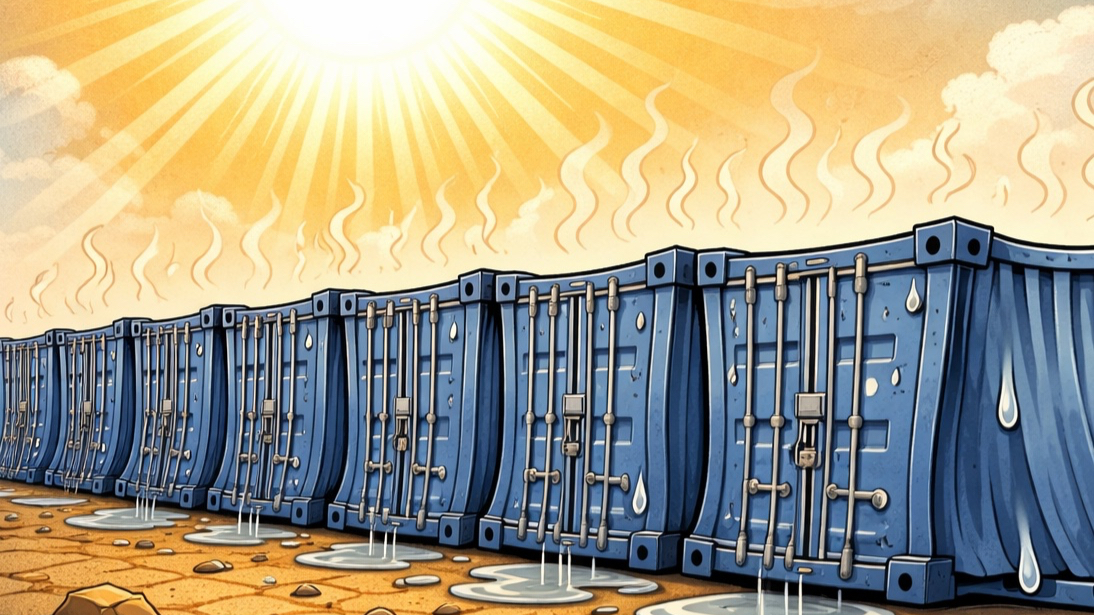
Do Storage Containers get too Hot?
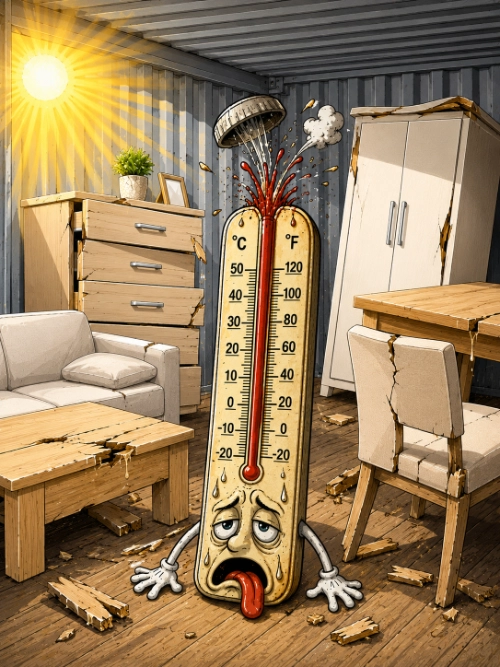
Too much heat in a container can damage furniture
It doesn't have to, if the container is insulated like ours.
How Hot Can a Shipping Container Get in Summer?
Without insulation and in direct sunlight, a steel shipping container can reach 50°C to 60°C depending on location and weather conditions. These temperatures are not ideal for the long-term storage of furniture and other heat-sensitive items.
Will sun on a container make it too hot for my furniture?
The temperature inside a steel shipping container can become very high when it is exposed to strong summer sunshine for long periods. Made from steel, shipping containers absorb heat quickly, raising internal temperatures to 50°C, and in some areas even higher. Prolonged periods at these temperatures are not ideal for wooden furniture and may cause:
- Warping or movement, especially of flat panels, doors and drawers
- Veneer edges lifting
- Glue joints weakening over time
- Potential effects on electronics, batteries, vinyl records and other heat-sensitive items.
If the storage container is too hot, the high temperatures can accelerate ageing, reduce lifespan or increase the risk of damage to sensitive electronic equipment.
See recommended storage temperatures for electronic equipment below:
| Item | Recommended Storage Temperature | Potential Issues at High Temperatures |
|---|---|---|
| Consumer Electronics (TVs, Computers, Hi-Fi, Printers) | 5°C to 35°C | Above 50°C for extended periods can accelerate ageing of components. |
| LCD / LED Screens | 0°C to 40°C | Above 50°C–60°C can damage displays and affect performance. |
| Hard Drives | 5°C to 40°C | Above 55°C can reduce lifespan and reliability. |
| Lithium Batteries | 10°C to 25°C (Ideal) | Above 40°C accelerates battery degradation and capacity loss. |
| Audio Equipment | 5°C to 35°C | Heat can dry out capacitors, rubber surrounds and seals. |
| Cameras | 5°C to 35°C | Heat can damage lubricants, seals and internal components. |
The shipping container temperature is very important for long term storage. Maintaining a cool temperature in hot weather can save the contents from irreparable damage.

Why Insulated Storage Containers Stay Cooler in Summer
Does the ventilation keep the container cool?
Most containers have built in ventilation holes. These are not big enough to allow sufficient air movement to significantly cool the container. It would require a door left open to allow significant cooling.
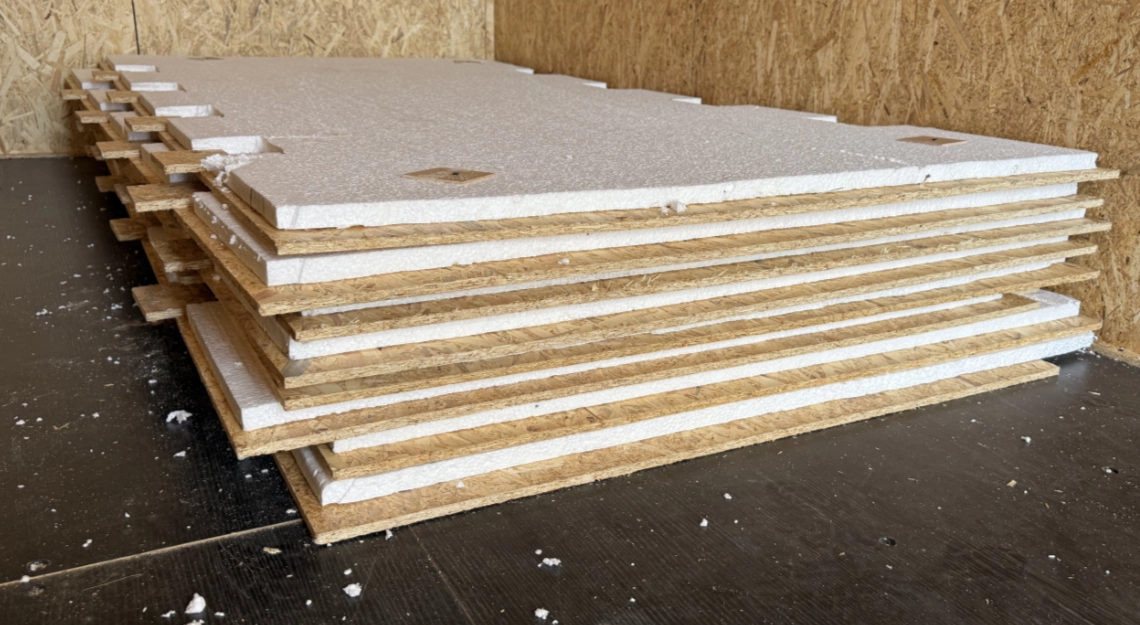
Boxed Up Storage uses 25mm of thermal insulation board and 9mm of Stirling chipboard to insulate against the sun. The ventilation holes are deliberately blocked to stop damp air entering that can cause condensation. Blocking the holes also reduces the chances of unwanted ingress of pests.
Learn more:
Condensation
Preventing Mould & Storage Odours
During hot weather, insulated containers can remain significantly cooler than standard steel containers and help reduce extreme temperature peaks.
Why Are Most Storage Containers Not Insulated?
Because it is very expensive.
Boxed Up Storage spends tens of thousands of pounds insulating and powering all their containers.
To the best of our knowledge, Boxed Up Storage is the only UK self-storage container facility where every container is insulated and powered. We do it because with all the hype about ventilation to keep the contents dry and cool, and absorbent sticks to soak up condensation, we know that to reduce the risk heat damage and mould, it must be insulated.
Below are container insulated panels being prepared for fitting.
Boxed Up Storage works hard to ensure its' customers contents are safe from avoidable damage whilst in its' care.
Frequently Asked Questions
How Hot Can a Shipping Container Get in Summer?
In direct sunlight, a standard steel shipping container can exceed 50°C and may approach 60°C during periods of hot weather. Internal temperatures depend on location, container colour, sun exposure and ventilation.
Can Heat Damage Furniture in Storage?
Yes. Prolonged exposure to high temperatures can cause wooden furniture to warp, veneer edges to lift and glue joints to weaken. Heat can also accelerate ageing of fabrics, plastics and rubber components.
What Items Can Be Damaged by Heat in a Storage Container?
Heat-sensitive items include furniture, electronics, batteries, vinyl records, musical instruments, photographs, paperwork and some plastics. Prolonged exposure to excessive temperatures can reduce lifespan, cause warping or accelerate deterioration.
Can Electronics and Batteries Be Stored in a Shipping Container?
Most electronics and batteries can be stored safely in a dry container, but excessive heat can shorten the lifespan of components, screens, hard drives and batteries. Lithium batteries are particularly sensitive to high temperatures.
Does Ventilation Keep a Storage Container Cool?
No. Standard container vents are primarily designed to reduce condensation and equalise air pressure. They are too small to provide enough airflow to significantly cool a container during hot weather.
What Is Better for Storage, Ventilation or Insulation?
Ventilation may help reduce moisture in some situations, but it does little to prevent heat build-up. Insulation helps reduce summer temperatures, winter cold surfaces and the risk of condensation.
Why Are Most Storage Containers Not Insulated?
Insulating a shipping container is expensive and labour intensive. Most storage facilities use standard steel containers because they are cheaper to install, although they provide less protection against temperature extremes.
Can a Shipping Container Become Hotter Than the Outside Air?
Yes. Steel absorbs heat from direct sunlight and can become significantly hotter than the surrounding air temperature. This is why a container can reach temperatures well above the outside air temperature during summer.