Are Storage Containers Cleaned after use?
How We Clean Our Storage Containers
When you move into a storage container, you should not be reminded of the person who used it before you.
A container may have been occupied for several years and used to store furniture, cardboard boxes, machinery, household possessions or business stock. During that time, dust and dirt can accumulate, liquids may have been spilt, odours can be absorbed by the wooden lining and insects may occasionally find their way inside.
That is why we believe preparing a storage container for its next customer should involve more than simply sweeping the floor.
Stage 1 – Cleaning and Inspection
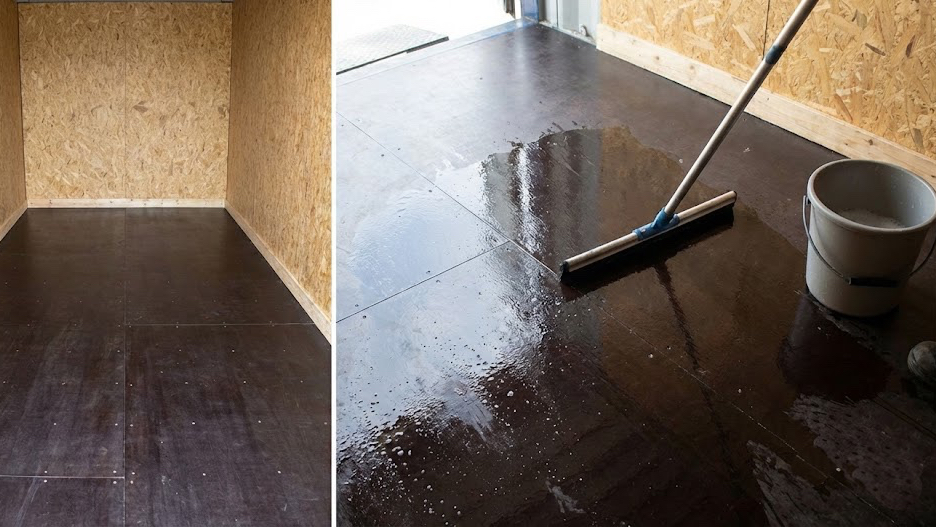
Once a container is empty, we inspect it properly. The floor is swept and cleaned, and we check for spillages, staining, signs of mould and evidence of insects or other pests.
Where the floor has been mopped, it is allowed to dry thoroughly. Putting possessions into a container while unnecessary moisture remains inside would increase humidity and the risk of condensation.
Cleaning More Than the Floor
Like most shipping containers, storage containers have a wooden floor. Unlike steel, timber is porous, so over a long period it can absorb spillages and unwanted odours from the goods stored inside.
Sweeping and mopping will clean the surface, but they may not completely remove an odour that has been absorbed into the timber. This is a potential problem with container storage generally, particularly when the same container has been used by a succession of customers.
At Boxed Up, we have an additional reason to take this seriously. Our containers are insulated and lined to help reduce condensation and extremes of temperature, and the internal lining also includes wood-based materials.
We therefore consider the whole interior of the container rather than assuming that a clean-looking floor means the container is completely clean. Physical cleaning comes first, but where odours or other problems remain, we can go further.
Stage 2 – Controlled Ozone Treatment
Ozone is a highly reactive gas. Rather than covering an unwanted smell with a fragrance, ozone reacts with many of the compounds responsible for odours.
Because it is a gas, it can be circulated throughout an enclosed container, reaching corners, joints and other areas that are difficult to reach by wiping or mopping.
We use controlled ozone treatment as an additional process where appropriate, particularly for persistent odours and where the internal surfaces require further treatment after conventional cleaning.
We Control the Treatment
Ozone treatment is not simply a matter of switching on a generator and leaving it running for an arbitrary length of time.
Its effectiveness depends on several factors, including ozone concentration, exposure time, temperature, humidity and the materials being treated.
Our treatment equipment is designed to circulate the atmosphere through the closed container while monitoring ozone concentration and humidity. Humidity is important because the amount of moisture in the air can influence the effectiveness of gaseous ozone treatment.
The treatment can therefore be based on measured conditions inside the container rather than simply the output rating of an ozone generator or a guessed treatment time.
What About Mould?
Ozone is not a substitute for dealing with the cause of mould.
If mould is found, we first consider why it developed. Excessive moisture, condensation, damp possessions or a spillage may be responsible. Visible contamination must be dealt with and the container thoroughly dried.
Controlled ozone can then be used as an additional treatment where appropriate. The important point is that treating mould without addressing the moisture that allowed it to develop would not solve the underlying problem.
Stage 3 – Insect Treatment
Insects present a different problem, so we do not rely on ozone alone to control them.
When a container becomes empty, it provides an opportunity to inspect areas that may have been inaccessible while it was occupied. Cleaning removes insects, webs, debris and other material that should not remain for the next customer.
If there is evidence of insects, an authorised insecticide can be applied to the empty container in accordance with the product instructions. Appropriate joints, corners, cracks and other places where crawling insects may hide can be treated where necessary.
Using an insecticide specifically designed and authorised for insect control is preferable to subjecting the whole container to unnecessarily high ozone concentrations for prolonged periods simply to deal with pests.
Why Three Different Processes?
There is no single cleaning method that is best at everything.
- Physical cleaning removes dust, dirt, spillages, debris and visible contamination.
- Controlled ozone treatment can help deal with persistent odours and reach areas that conventional cleaning may not easily reach.
- Insect treatment allows an authorised product specifically intended for insect control to be used when required.
Using the appropriate method for each problem allows us to prepare a container properly without relying unnecessarily on any one treatment.
Why Use a Gas After Conventional Cleaning?
Liquid cleaning products are useful on surfaces that can be washed or wiped, but they only work where they are actually applied.
A gas behaves differently. When circulated through an enclosed space, it can reach corners, joints and other awkward areas that cannot easily be wiped or sprayed.
The same general principle of using gaseous treatment alongside conventional cleaning is used in specialist controlled environments, including some healthcare applications.
We are not suggesting that a storage container requires hospital-level decontamination. The principle is much simpler: properly cleaning an enclosed space can involve more than cleaning the surfaces that are easiest to reach.
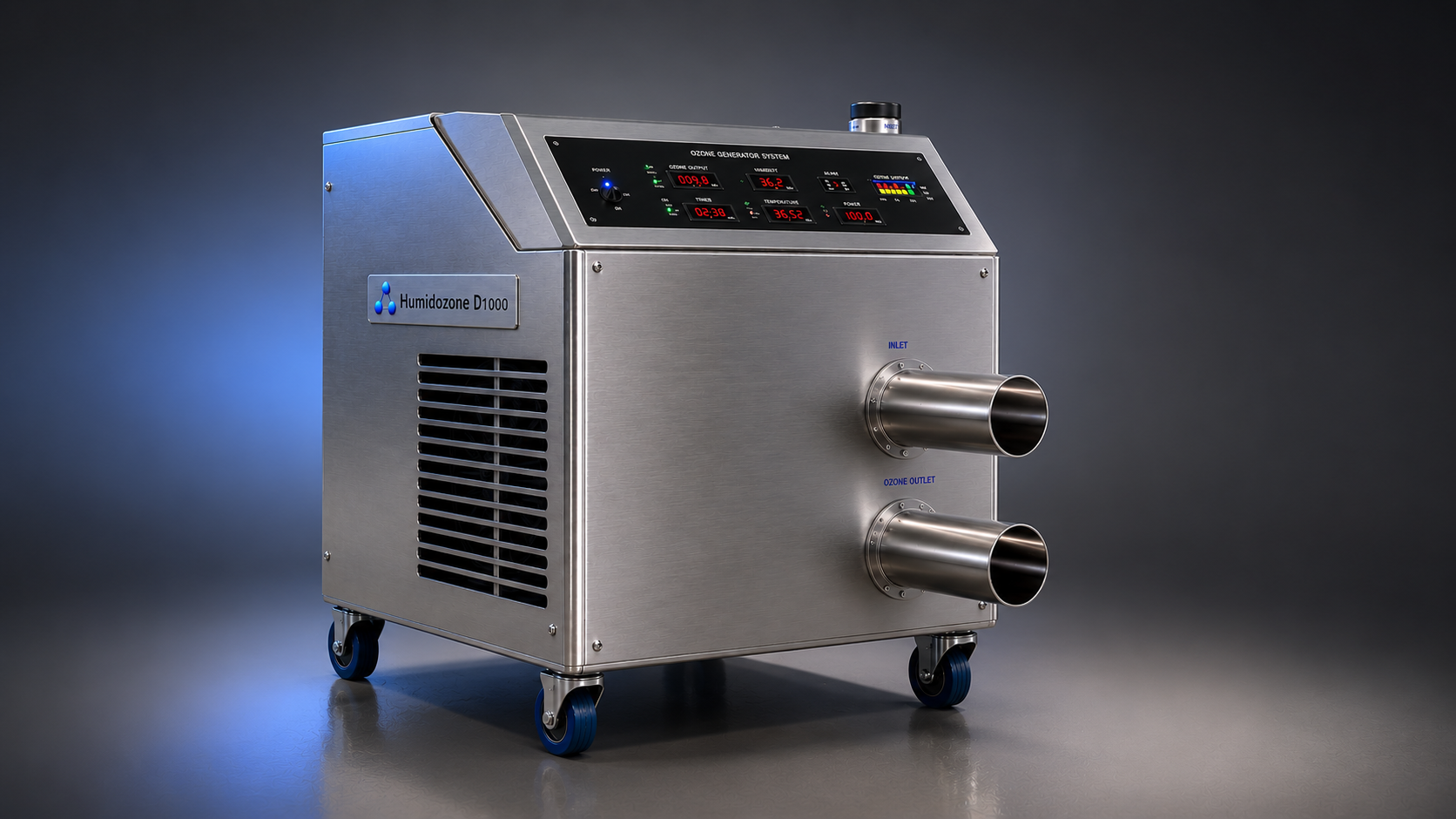
Humidozone - Ozone machine
Ozone Is Dangerous
Ozone should not be treated as an ordinary household cleaning product.
At the concentrations used for treatment, ozone can be hazardous to people and animals if inhaled. Our treatment is therefore carried out only in an empty, closed container under controlled conditions.
The equipment is operated and monitored from outside the container. Nobody needs to enter while ozone is being generated.
When ozone generation stops, the ozone progressively decomposes. Before the container is returned to normal use, it is opened and thoroughly ventilated.
We do not recommend that customers use ozone generators themselves inside their storage containers.
Prepared for the Next Customer
Sweeping and mopping a floor is easy. The important part is recognising that, after a container has been occupied for a long period, this may not be enough.
At Boxed Up, we consider the whole internal environment: the floor, insulated lining, moisture, odours, mould and signs of pests. We can then use the appropriate cleaning or treatment process for the condition of that particular container.
Not every container needs every treatment. What matters is that it is inspected and properly prepared before it is offered to another customer.
When you open your storage container for the first time, it should feel like your container — not the previous customer's.